Changing field conditions
Access, infrastructure condition and maintenance needs can change quickly after flood or landslide events.

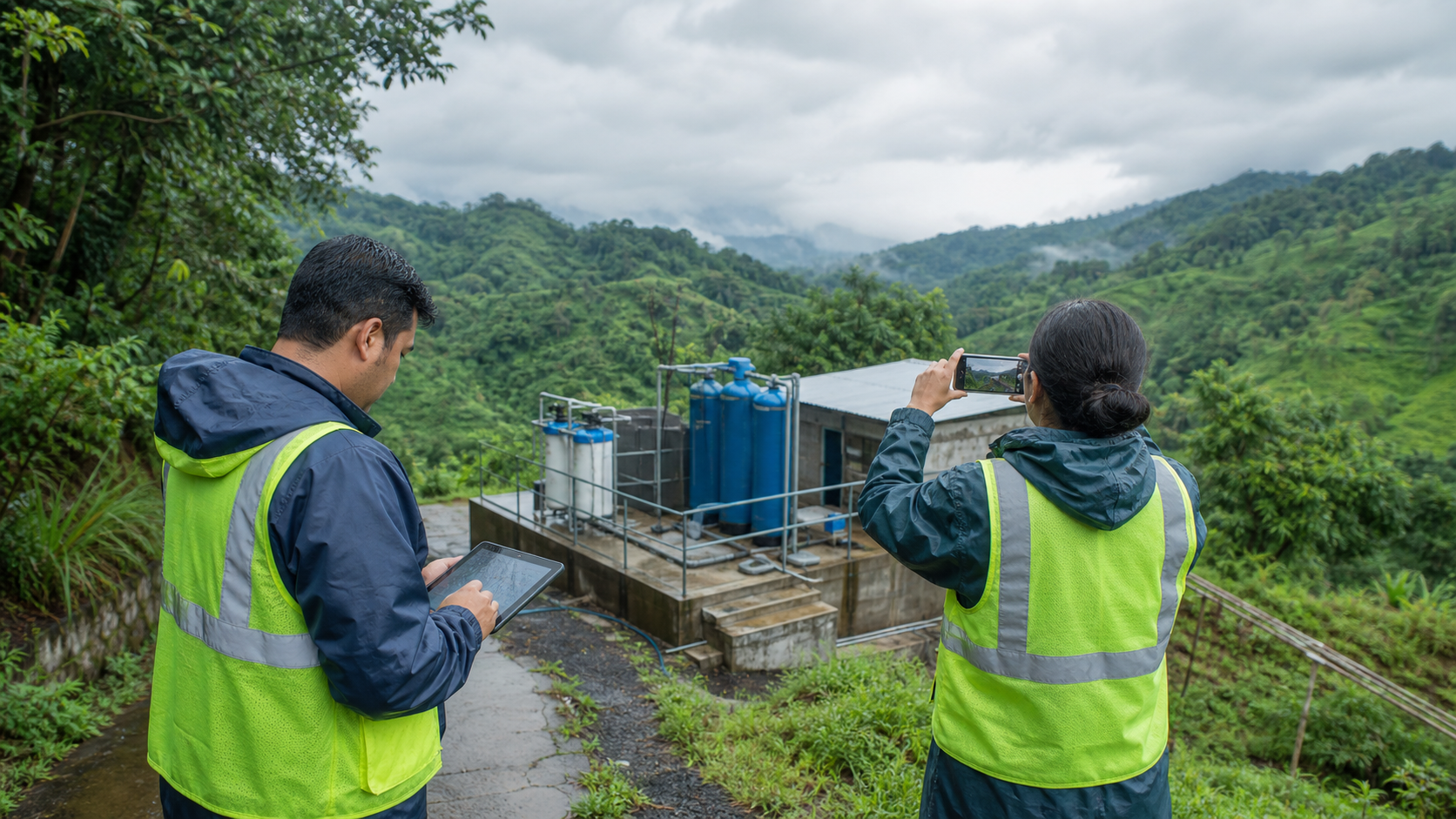 AI-generated representative scene · not a project-site photograph
Client case study · DPHE-UNICEF · Flood and Landslide Response 2026
During the DPHE-UNICEF Flood and Landslide Response, 2026, Tiger One and Skyhawk support field data collection, supervision and monitoring of treatment-plant maintenance work across Chattogram and the Hill Tract.
Floods and landslides can disrupt access, damage water infrastructure and make normal reporting routines impractical. Response teams need timely, consistent information from the field to understand the condition of treatment facilities, supervise maintenance work and coordinate follow-up without adding unnecessary reporting burden to frontline staff.
This case study is intentionally high-level. It does not reveal affected communities, facilities, response coverage, assessment findings, quantities, personnel, contact details, coordinates, photographs, internal screens or response plans.
Challenge
Access, infrastructure condition and maintenance needs can change quickly after flood or landslide events.
Field teams, supervisors and response managers need the same current record while working from different locations.
Emergency operations require disciplined handling of location-specific, household-level and personnel information.
Solution
Skyhawk gives field teams a consistent way to record what they observe and the maintenance work they supervise. Tiger One makes those updates available as a governed response record for review, follow-up and coordination.
Skyhawk enables teams to collect structured condition and maintenance information from affected water-treatment facilities in the field.
Field submissions can include date-stamped supporting evidence, helping response managers understand the basis of a reported need or completed action.
The workflow supports supervision of treatment-plant maintenance work, from field reporting through review and follow-up.
Tiger One helps organize issues by response status so teams can focus attention on work that needs action or verification.
A shared management record reduces dependence on disconnected calls, messages and spreadsheets during a fast-moving response.
Role-based review helps keep field information useful for coordination while respecting the sensitivity of emergency operational data.
The advantage
Structured forms help field teams capture the information that matters without reinventing the reporting process for each update.
Reviewers can see the field update and supporting evidence together, giving them a clearer basis for follow-up.
Recorded submissions and review status create a traceable pathway from field observation to coordinated maintenance action.
The attached response material includes operational field records. To protect affected people and response operations, this public case study excludes all sensitive data, including exact locations, facilities, quantities, damage assessments, resource movements, personnel details, contact information, update dates and internal reporting outputs.
Field evidence when it matters most.