
 AI-generated representative visual
Client case study · Rajshahi City Corporation
Shohor · RCC
My Rajshahi is now in full-swing public use.
Rajshahi City Corporation uses Shohor, the Tiger One module for citizen services, to run the refreshed My Rajshahi portal: a Bengali citizen-service front door for applications, status lookup, notices, licensing, holding tax, engineering, health, waste-management and back-office workflow.
ClientRajshahi City Corporation (RCC)
Live portalMy Rajshahi, powered by Shohor
FocusFull-swing citizen-service delivery
The municipal context
A city corporation’s responsibility spans services, revenue, assets and public space.
Rajshahi City Corporation administers a wide range of municipal responsibilities, from citizen-facing services such as trade licensing, holding-tax assessment and civil registration to market management, public health, environment and welfare, and the back-office, finance and platform functions that support them. Each of these responsibilities generates its own records and decisions. Shohor provides an enterprise layer through which these service domains can be viewed as parts of the same institutional record.
One platform · Client-owned deploymentRajshahi City Corporation owns and operates this deployment of Shohor.
Rajshahi City Corporation owns the municipal services and operational data covered by this deployment. Tiger Park Limited supplies the underlying Shohor module, built on Tiger One, and supports its implementation and continued operation.
Live public portal
The refreshed My Rajshahi experience is built around citizen action.
The current portal presents a Bengali-first civic interface with service discovery, notice access, application instructions and direct status checking. This public layer is the visible face of a larger Shohor deployment used by the city corporation.
নাগরিক সেবারাজশাহী সিটি কর্পোরেশন
আবেদনের অবস্থা যাচাইফোন নম্বর + আবেদন নম্বর
ট্রেড লাইসেন্সহোল্ডিং ট্যাক্সপ্রকৌশল বিভাগস্বাস্থ্য বিভাগবর্জ্য ব্যবস্থাপনানোটিশসমূহ
Representative public-portal structure based on the live My Rajshahi entry points. No private citizen or operational data is shown.Citizens can check a submitted application with a phone number and application number.
Revenue, engineering, health, waste-management and secretariat services are grouped by department.
Notices and application instructions sit beside service entry points.
The public portal is credited as Tiger Park’s Shohor citizen-service platform.
Challenge
See a wide municipal mandate as one operating system.
Many service domains
Citizen requests, complaints, licensing, holdings, assets and field work each create their own records and decisions.
Citizen expectations
Residents expect requests and complaints to be tracked and answered, not lost between departments and counters.
Exceptions hidden in volume
Overdue requests, ageing complaints and administrative gaps need to be visible before they become routine.
Solution
Shohor becomes a shared enterprise record across every service category.
The module organizes the corporation’s work into the same service categories used in Shohor’s own module inventory, while presenting management with a shared enterprise view. It does not reduce every function to a single screen; it gives each function a place in the same governed system.
Revenue & Taxation
Holding tax assessment, amendment, appeal and review, with merger and name-separation workflows for the underlying holding record.
Licensing & Permits
Trade and advertisement licences, contractor enlistment, and premises, medical, educational and pet registrations, each with its own renewal cycle.
Civil Registration & Certificates
Birth, death, citizenship, inheritance (waris) and divorce registration, plus configurable certificate types beyond the standard set.
Property, Markets & Rentals
Market shop allotment, sublet and transfer, road, sidewalk and vehicle rental, and legacy allotment records kept searchable.
Public Health, Environment & Welfare
Waste management, pollution complaints, water and gas connections, immunisation records, dispute resolution and citizen welfare support.
Connected Field Response
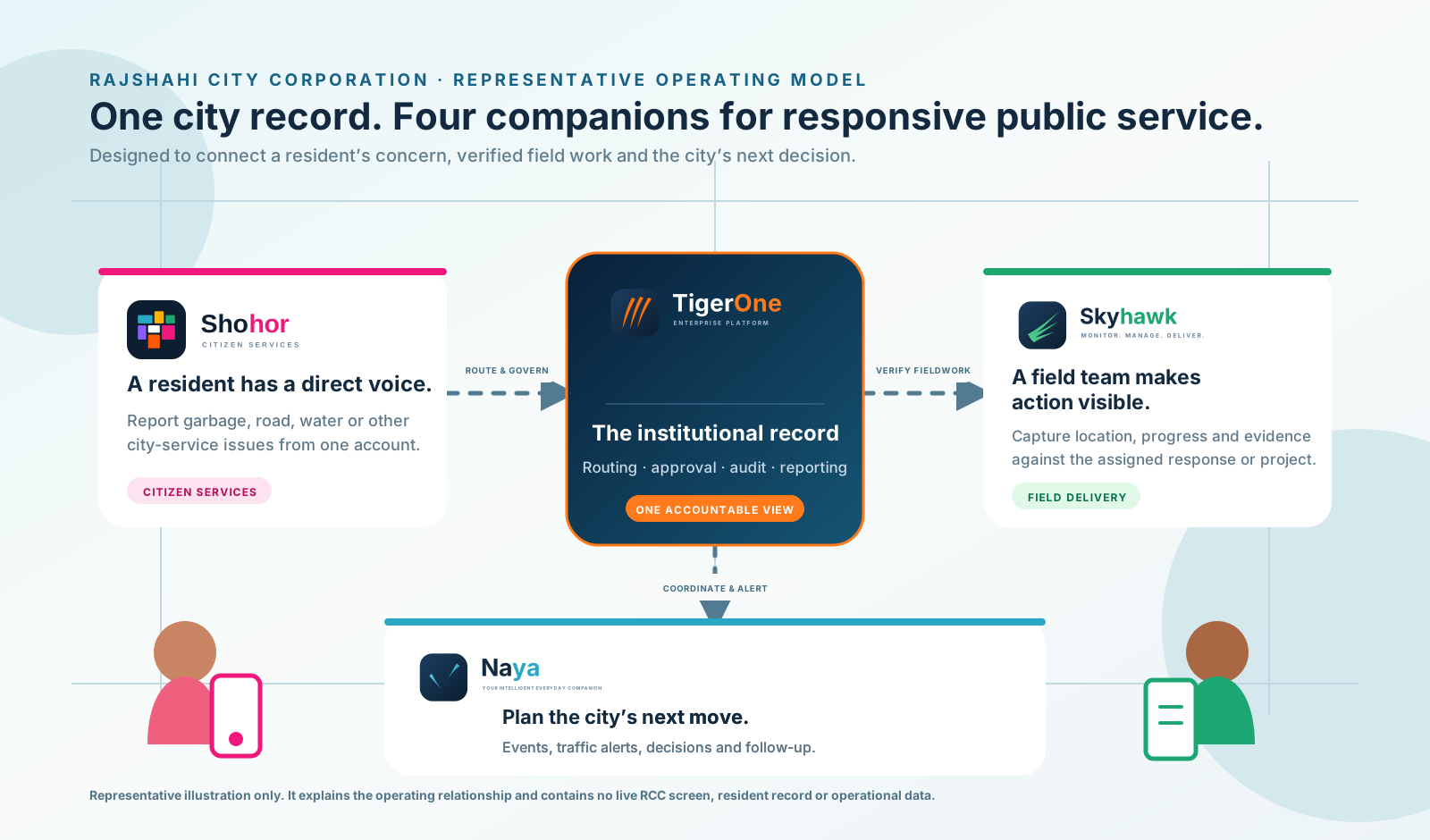
Residents can submit garbage and other city-service complaints from their Shohor account. Skyhawk supports field response and project-status updates, while Naya supports meeting planning and follow-up.
Back Office & Workflow
Staff workspace, department and role-based routing, ward and address registry, e-Nothi integration, reporting and citizen messaging.
Finance & Payments
Invoicing and ledger control, online payment gateway integration, and bank and challan reconciliation.
Platform
A bilingual citizen portal, OTP login, push notifications, a documented API and per-deployment configuration.
Citizen-to-field response
Take a city-service complaint from a resident account to field evidence and management follow-up.
Shohor gives residents a direct route to report garbage and other municipal issues. Skyhawk gives city teams a shared field-response and project-status workflow, while Naya helps turn the items that need coordination into planned meetings, decisions and accountable follow-up.
A resident signs in to Shohor and submits a garbage or other municipal issue.
The issue moves into Skyhawk as a field-response record for the responsible city team.
Staff record field progress and project-status updates against the work underway.
Naya supports meeting planning, decisions and follow-up when a response needs coordination.
The city has a clearer trail from citizen report through action and accountable review.
Representative management view
Turn many service counters into one management conversation.
A leadership view can summarize demand, workflow movement, ward-level patterns and the exceptions that need attention while keeping citizen records and sensitive operational figures inside the governed system.
Service demand
Compare applications and requests by service domain and ward.
Workflow movement
See where applications are waiting between review, payment, approval and issue.
Revenue control
Connect assessment, collection, receipts and reconciliation without publishing sensitive figures.
Management attention
Bring ageing requests, renewal deadlines, field follow-up and meeting actions into one review queue.
SHOHORMunicipal operations
Representative visual · no live dataService demand by domainIllustrative relative pattern
Ward-level service pattern30 public administrative wards
123456789101112131415161718192021222324252627282930
Management attentionGoverned exception view
Ageing service requestsReview by department and stage
ReviewRenewal deadlinesLicences, permits and registrations
PlanPayment reconciliationAssessment, receipt and bank record
MatchField and meeting follow-upComplaints, project status and assigned action
AssignConnected service cycle
From citizen application to a closed, verifiable record.
A citizen applies online, in Bangla or English.
The fee is assessed against the relevant service and ward.
Payment is collected online and a receipt issues instantly.
An officer approves through the routed department workflow.
A certificate or approval issues, verifiable and on file.
Operational value
A clearer institutional line of sight across connected municipal operations.
Citizen requests, complaints, holdings, licensing, field response and assets are organized within a shared environment rather than isolated department views.
Overdue requests, unresolved complaints and stalled field follow-up can be surfaced for focused review within governed workflows.
The same structured records can support management reporting and deeper service and asset analysis over time.
Next opportunity
Turn connected municipal records into service intelligence.
As completeness and history grow, this deployment can move beyond consolidated reporting toward governed analysis that helps the corporation prioritize maintenance, improve service response and coordinate departments more effectively.
Service-level intelligence
Combine request type, routing and resolution history to see where citizen response could improve.
Maintenance prioritization
Connect asset condition, complaint patterns and field history to plan upkeep with better evidence.
Revenue and compliance patterns
Compare holdings, licensing and assessment records to support fair, consistent administration.
Area-level performance view
Relate requests, complaints and field activity by zone and ward to guide local attention.
Field-team coordination
Use assignment, location and workload patterns to improve coverage and response time.
Cross-department coordination
Connect assets, services and complaints across departments to reduce fragmented handling.
Evidence and framing
Grounded in RCC’s public service mandate and live public portal.
This case study presents the platform at a high level without publishing internal screens or operational figures. Institutional framing is supported by Rajshahi City Corporation’s official portals, which describe its 30 wards, six municipal departments and the citizen services administered across those departments. The live My Rajshahi portal now publicly shows the refreshed citizen-service entry point, application status lookup and service categories. The hero is an AI-generated representative visual, not an RCC photograph or system screen.
The public hero is an AI-generated representative visual. No confidential operational data is reproduced.
One institution. One governed view.